




As industrial automation continues to evolve,manufacturers are placing greater emphasis on precision,reliability,and efficient system configuration.Among the many components that contribute to modern control systems,the Coded SWITCH plays a critical role in enabling accurate parameter selection,equipment configuration,and operational control.
Whether used in factory automation,communication equipment,or intelligent control panels,a high-quality Industrial Coded Switch provides a simple yet highly reliable method for assigning operating modes and control signals.Thanks to their compact design and dependable performance,coded switches remain an essential component in today's automated environments.
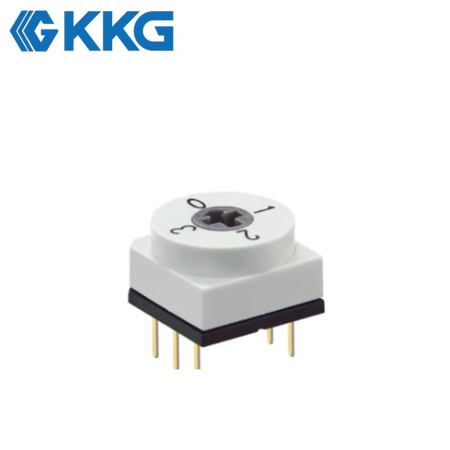
What Is a Coded Switch?
A Coded Switch is an electromechanical device designed to generate specific output codes based on its selected position.Common types include the Rotary Coded Switch,Binary Coded Switch,and hexadecimal coded switch.These devices allow users to manually set system parameters without requiring complex software programming.
Compared with traditional configuration methods,coded switches offer greater simplicity,faster setup,and enhanced reliability in harsh industrial environments.
Top 10 Applications of Coded Switches in Industrial Automation
1.PLC Address Configuration
Programmable Logic Controllers(PLCs)often use Rotary Coded Switch components to assign node addresses quickly and accurately.
2.Industrial Control Panels
A Control Panel Switch allows operators to select operating modes,machine functions,and communication channels efficiently.
3.Motor Drive Systems
Variable frequency drives and motor controllers frequently incorporate coded switches for parameter adjustment and operating mode selection.
4.Industrial Communication Equipment
Communication modules use Binary Coded Switch solutions to define network addresses and communication protocols.
5.Robotics Systems
Industrial robots require precise configuration settings,making coded switches an ideal choice for system initialization.
6.Sensor Calibration Equipment
Many advanced sensors rely on switch-based configuration during installation and maintenance procedures.
7.Power Distribution Systems
Electrical control cabinets use Electronic Selector Switch devices to select monitoring modes and safety parameters.
8.Automated Manufacturing Lines
Production equipment often utilizes a PCB Coded Switch for quick machine setup and product changeovers.
9.Test and Measurement Instruments
Industrial testing devices benefit from coded switches that allow technicians to select functions accurately and repeatedly.
10.Smart Factory Control Networks
As Industry 4.0 technologies expand,Miniature Coded Switch products continue to provide reliable hardware-based configuration options for connected devices.
Key Features of Modern Coded Switches
Today's industrial users demand components that deliver long-term stability and easy operation.Modern coded switches offer several important advantages:
Compact and space-saving design
High reliability and long electrical life
Precise positioning and coding accuracy
Excellent vibration resistance
Easy installation on printed circuit boards
Suitable for automated production processes
Available in multiple coding formats
In addition,manufacturers can provide Custom Coded Switch solutions to meet specialized requirements for voltage ratings,mounting styles,and coding configurations.
Why Coded Switches Remain Important
Despite advances in digital software configuration,many engineers still prefer coded switches because they provide a direct and visible method of setting parameters.Unlike software settings that may be altered unintentionally,a physical switch position offers greater security and easier troubleshooting.
For industrial environments where reliability is essential,the simplicity of a coded switch often becomes a significant advantage.
FAQ
Q1:What is the main purpose of a coded switch?
A coded switch allows users to manually select and assign operating parameters,addresses,or control functions within electronic and industrial systems.
Q2:What is the difference between a Rotary Coded Switch and a Binary Coded Switch?
A Rotary Coded Switch uses rotating positions to generate output codes,while a Binary Coded Switch provides binary-coded outputs commonly used for addressing and configuration.
Q3:Are coded switches suitable for industrial environments?
Yes.Most Industrial Coded Switch products are designed to withstand vibration,temperature variations,and long operating cycles.
Q4:Can coded switches be mounted directly on PCBs?
Absolutely.Many PCB Coded Switch models are specifically designed for through-hole or surface-mount PCB installation.
Q5:Are custom solutions available?
Yes.Many manufacturers offer Custom Coded Switch options tailored to specific applications,coding formats,and mounting requirements.