
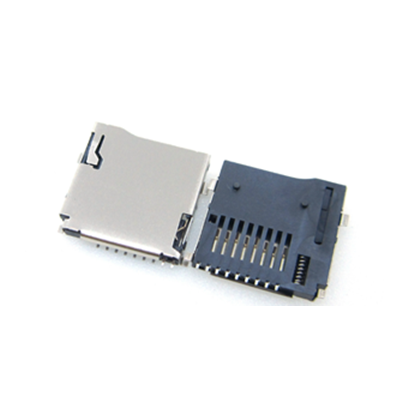
Pin design is the most critical aspect of card sockets. The core objective of SD card socket pin design is to achieve stable and efficient data exchange between SD cards and host devices through rational pin allocation and electrical design, while accommodating the requirements of diverse application scenarios.
The SD card slot serves as the interface connecting SD memory cards to electronic devices. Its structure is precision-engineered with diverse functionalities. Below are its core structural components:1.Plastic Housing
Function: Acts as the main frame of the card slot. It secures the connector by inserting into the device slot, providing mechanical support and protection to prevent damage to internal components from external forces. Design Features: The end face of the housing features multiple flat metal contact pins (prone to bending), which must precisely align with the gold fingers inside the SD card's insertion slot.2.Metal Pins (Contact Terminals)Quantity and Configuration: SD card slots typically feature an 11-pin design (9 pins + CD + Wp), while SD cards themselves have 9 pins. The additional pins are used for detecting card insertion status (CD) and write protection (Wp). Function: Makes electrical contact with the SD card's gold fingers to enable data transfer and command communication.3.Guiding StructureDesign: Features raised openings or notches within the slot that align with the SD card's corner cutouts or markings. Function: Guides users to insert the SD card correctly, preventing reverse insertion that could damage pins or the slot.4.Reset MechanismType: Includes spring-loaded or cut-out leaf springs located at the bottom of the slot.
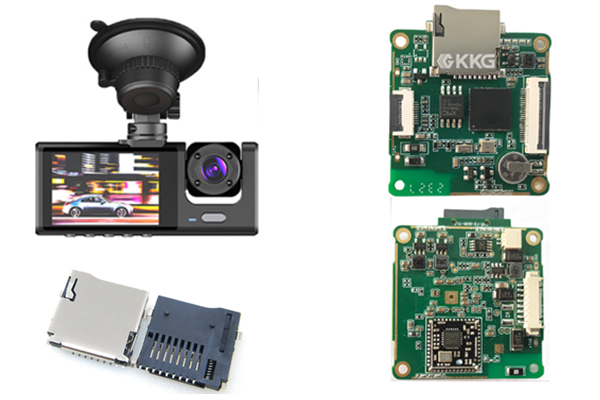
In dashcams, the SD card slot serves as the core storage interface, responsible for securing and connecting the SD card to ensure stable video data read/write operations. Its design must balance space compatibility, operational convenience, and data security.
SD card slots typically employ a spring-loaded mechanism, centered around a reset structure at the bottom of the slot (such as a small-diameter spring or a notched spring clip). When the user presses the SD card, the slot makes firm contact with the card via internal contacts, establishing a stable electrical connection for data read/write operations. Pressing again triggers the reset mechanism to eject the SD card, facilitating replacement or removal. Additionally, some premium SD card slots support SD 4.0 specifications, offering higher data transfer speeds and larger storage capacities to meet extended high-definition video recording demands.
Application Advantages
Space Efficiency: Dashcams have limited internal space. The compact design of SD card slots (especially those supporting MicroSD cards) maximizes space utilization, preventing oversized components from disrupting the device's overall layout.
Operational Convenience: The spring-loaded design allows users to insert and remove cards with one hand, eliminating the need for additional tools. The card slot is typically positioned on the side or bottom of the device, facilitating maintenance for dashcams installed in concealed locations.
Data Security: SD card slots ensure reliable data transfer through stable contact points, minimizing video frame loss or data corruption caused by poor connections. Additionally, some slots feature hot-swap protection to prevent accidental damage to the device or storage card from user misoperation.