




A Rocker Potentiometer is a type of adjustable electronic component that combines the functions of a rocker actuator and a variable resistor.It is designed to control electrical signals by changing resistance through a rocking motion,allowing users to adjust parameters such as volume,brightness,speed,or power output.
Compared with traditional Rotary Potentiometers,Rocker Potentiometers provide a more convenient operating method and a compact installation structure.They are widely used in automotive electronics,audio equipment,industrial control systems,and consumer electronic devices.
For engineers,product designers,and electronic component buyers,understanding how a rocker potentiometer works and where it is used can help in selecting the right control solution.
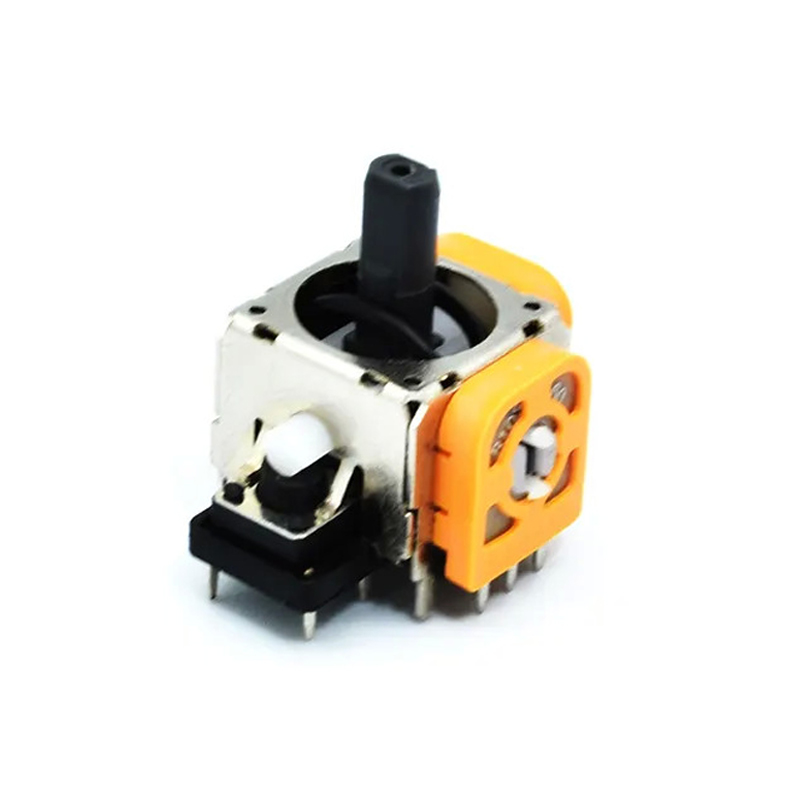
What Is a Rocker Potentiometer?
A Rocker Potentiometer is an electronic component that uses a rocker-style mechanical actuator to adjust resistance values.When the rocker is moved up or down,the internal contact position changes along a resistive track,modifying the output voltage or current.
Unlike a standard Rocker Switch that only provides ON/OFF operation,a rocker potentiometer allows continuous adjustment between minimum and maximum values.
A typical rocker potentiometer consists of:
Rocker actuator
Resistive element
Sliding contact(wiper)
Terminals
Housing and mounting structure
By adjusting the rocker position,users can achieve precise control of electronic functions.
How Does a Rocker Potentiometer Work?
The working principle of a rocker potentiometer is based on variable resistance.
When an electrical voltage is applied across the resistive element,the wiper position determines the output voltage.Moving the rocker changes the wiper position,which changes the resistance ratio.
The basic working process includes:
1.Mechanical Movement
The user moves the rocker actuator to a specific position.
2.Resistance Adjustment
The internal wiper moves along the resistive track,changing the resistance value.
3.Signal Control
The changed resistance regulates the electrical output signal,controlling connected devices.
For example,in an audio system,a rocker potentiometer can adjust volume by changing the signal level.In industrial equipment,it can control motor speed or operating parameters.
Key Features of Rocker Potentiometers
1.Simple and Convenient Operation
The rocker design allows users to make quick adjustments with minimal effort.This makes it suitable for control panels where frequent operation is required.
2.Space-Saving Structure
Rocker potentiometers usually have a compact design,making them ideal for applications with limited installation space.
3.Precise Variable Control
Unlike standard SWITCHes,rocker potentiometers provide continuous adjustment instead of only two states.This enables more accurate control of electrical systems.
4.High Mechanical Durability
High-quality models are designed for repeated operation and can withstand thousands or even hundreds of thousands of adjustment cycles.
5.Flexible Customization Options
Professional potentiometer manufacturers can provide customized solutions,including:
Different resistance values
Various actuator designs
Custom terminal configurations
Special mounting requirements
Common Applications of Rocker Potentiometers
Audio Equipment
One of the most common applications of rocker potentiometers is audio control.
They are used for:
Volume adjustment
Tone control
Audio mixers
Amplifiers
Speaker systems
Their compact size and easy operation make them suitable for professional and consumer audio products.
Automotive Electronics
In vehicles,rocker potentiometers are often integrated into control panels.
Typical applications include:
Dashboard controls
Lighting adjustment
Seat controls
Climate control systems
Vehicle entertainment systems
Their durability and user-friendly operation make them suitable for automotive environments.
Industrial Control Equipment
Industrial systems require reliable control components for adjusting machine parameters.
Rocker potentiometers are commonly used in:
Automation equipment
Control panels
Motor speed controllers
Testing instruments
Manufacturing machinery
Consumer Electronics
Many electronic products use rocker potentiometers for intuitive adjustment functions,including:
Gaming devices
Electronic instruments
Household equipment
Portable devices
Rocker Potentiometer vs Rocker Switch:What Is the Difference?
| Feature | Rocker Potentiometer | Rocker Switch |
|---|---|---|
| Main Function | Variable adjustment | ON/OFF control |
| Output | Adjustable resistance signal | Switching signal |
| Control Method | Continuous movement | Two-position movement |
| Applications | Volume, speed, brightness control | Power switching |
A rocker switch is suitable for simple control,while a rocker potentiometer is better when precise adjustment is required.
How to Choose the Right Rocker Potentiometer?
When selecting a rocker potentiometer,several specifications should be considered:
Resistance Value
The resistance range should match the requirements of the circuit design.
Common resistance values include:
1KΩ
5KΩ
10KΩ
50KΩ
100KΩ
Power Rating
The power rating determines how much electrical load the potentiometer can handle safely.
Operating Life
For frequently used applications,choose products with higher mechanical durability.
Mounting Method
Consider whether the component requires:
Panel mounting
PCB mounting
Custom installation
Environmental Requirements
For industrial and automotive applications,factors such as temperature resistance,vibration resistance,and protection level should be considered.
FAQ
1.What is a rocker potentiometer used for?
A rocker potentiometer is mainly used for adjustable electronic control functions,including volume control,brightness adjustment,motor speed regulation,and industrial parameter adjustment.
2.How does a rocker potentiometer differ from a normal potentiometer?
A traditional potentiometer usually uses a rotating knob,while a rocker potentiometer uses a tilting rocker mechanism to adjust resistance.The main difference is the operating method.
3.Can rocker potentiometers be customized?
Yes.Many custom potentiometer manufacturers provide OEM services,including customized resistance values,housing designs,terminals,and installation methods.
4.What industries use rocker potentiometers?
Rocker potentiometers are widely used in automotive electronics,audio equipment,industrial automation,medical devices,and consumer electronics.
5.How long does a rocker potentiometer last?
The lifespan depends on product design,materials,and usage conditions.High-quality rocker potentiometers can typically support tens of thousands or more operating cycles.