




A switch is one of the most basic yet essential components in electronics and electrical systems.Whether in your home,vehicle,industrial equipment,or DIY projects,switches control the flow of electricity,turning devices on or off,or even changing their operational modes.But how does a switch work,and what makes it so versatile?Let’s dive in.
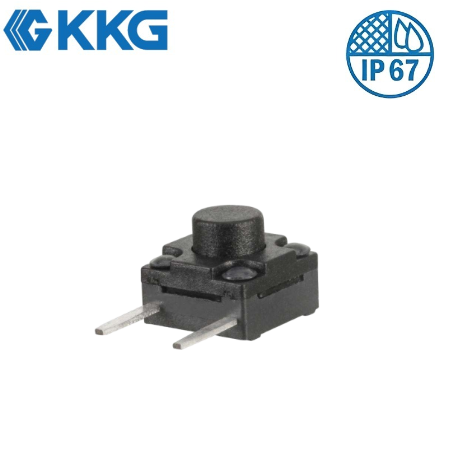
What Is a Switch?
A switch is an electrical device that can connect or disconnect a circuit,allowing or preventing the flow of electric current.In simple terms,it acts as a gate for electricity.When the switch is turned on,the circuit is complete and electricity flows.When turned off,the circuit is broken,and electricity stops.
Switches come in various types,sizes,and functions,making them suitable for applications ranging from household lighting to advanced electronic systems.
How Does a Switch Work?
The working principle of a switch is surprisingly simple:it makes or breaks an electrical connection.
1.Switch ON
Electrical contacts inside the switch connect.
The circuit becomes complete.
Electricity flows to the connected device.
The device operates normally.
2.Switch OFF
Electrical contacts separate.
The circuit is interrupted.
Electricity stops flowing.
The device turns off.
Think of it as opening and closing a gate for electricity.Some switches,like push buttons,return to the original position automatically,while others,like toggle or Rocker Switches,stay in the selected position.
Common Types of Switches
Different applications require different types of switches.The most common include:
1.Toggle Switch
Operated with a lever.
Durable and easy to use.
Common in industrial equipment and automotive controls.
2.Push Button Switch
Activated by pressing a button.
Used in computers,elevators,and doorbells.
3.Rocker Switch
Rocks between ON and OFF positions.
Often found in power strips and household appliances.
4.Slide Switch
Operates by sliding a mechanism.
Common in portable electronics and toys.
5.Rotary Switch
Uses a rotating knob to select multiple positions.
Used in audio equipment,instruments,and machinery.
6.Smart Switch
Electronically controlled,often Wi-Fi-enabled.
Can be automated,controlled remotely,or integrated with smart homes.
Applications of Switches
Switches are used in nearly every electrical system.Some examples include:
Home
Light switches
Ceiling fans
Kitchen appliances
Smart home devices
Automotive
Headlights
Power windows
Ignition systems
Dashboard controls
Industrial
Machine operation
Emergency stops
Production control systems
Electronics&DIY Projects
Arduino or Raspberry Pi projects
LED lighting systems
DIY Book Nooks
Robotics projects
Features of a Good Switch
When choosing a switch,consider:
Electrical rating(voltage and current)
Durability and operating life
Size and installation method
Material quality
Waterproof or dustproof protection(if required)
Ease of operation
A high-quality switch should reliably operate thousands of cycles without failure.
FAQ
What is the main purpose of a switch?
A switch controls the flow of electricity in a circuit by connecting or disconnecting electrical contacts.
How does a switch control LED lights?
When the switch is ON,electricity flows to the LEDs,lighting them up.Turning the switch OFF stops the flow.
What is the difference between a switch and a button?
A switch usually stays in its selected position until changed,while a button often returns to its original state automatically.
Can a switch be used in DIY projects?
Yes.Switches are essential in DIY electronics,robotics,LED lighting,and hobbyist projects like DIY Book Nooks.
Why are switches important?
Switches provide convenient control,enhance safety,and allow devices to operate efficiently.